
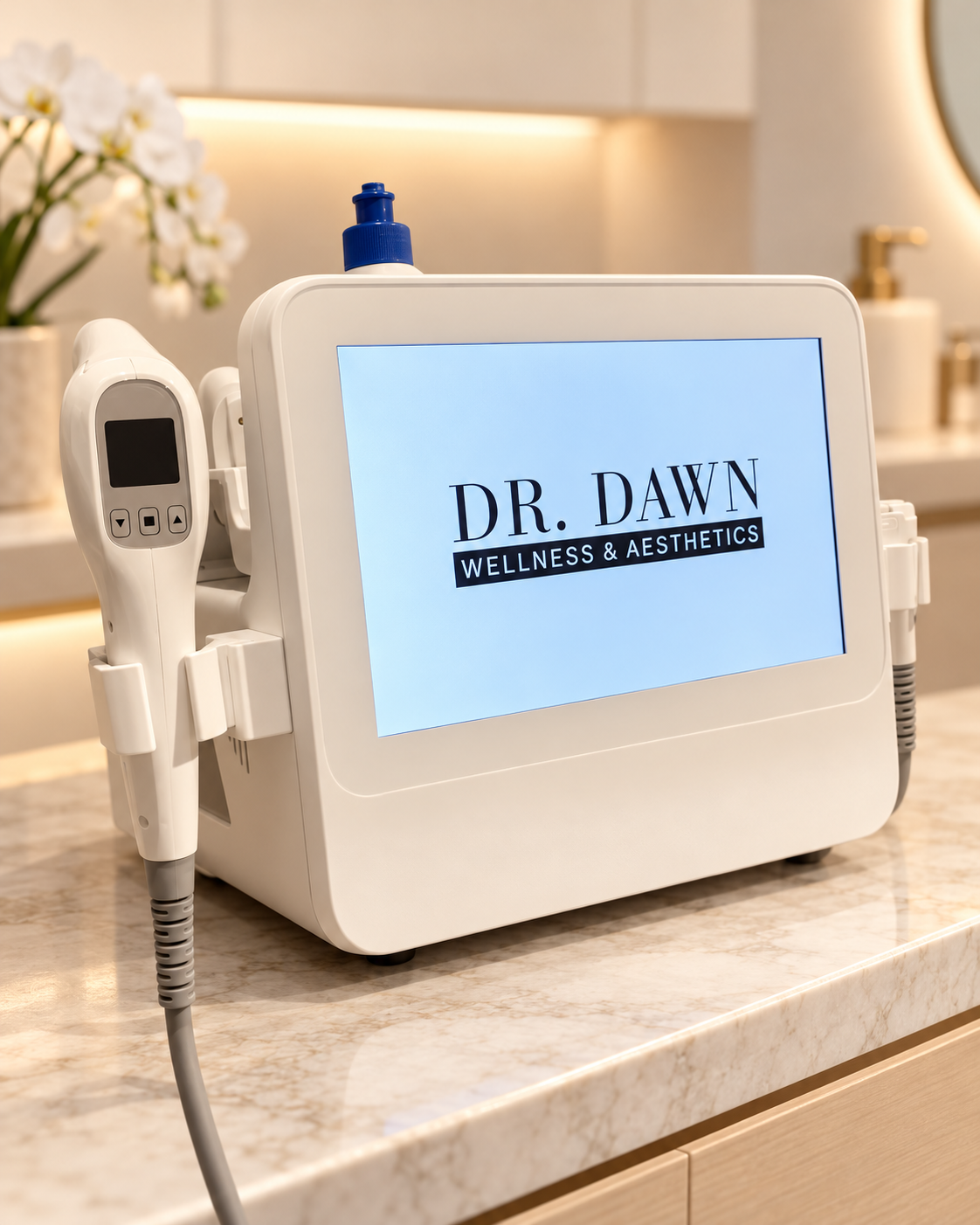
Looking for firmer skin and a more defined jawline without surgery? As we age, our skin naturally loses collagen and elasticity. Over time, this can lead to sagging around the cheeks, jawline, and under-chin area, making facial contours appear less defined.
Modern aesthetic technology offers non-surgical options to help address these concerns. HIFU (High-Intensity Focused Ultrasound) is a non-invasive treatment designed to support skin firmness, natural collagen production, and the appearance of more defined facial contours.
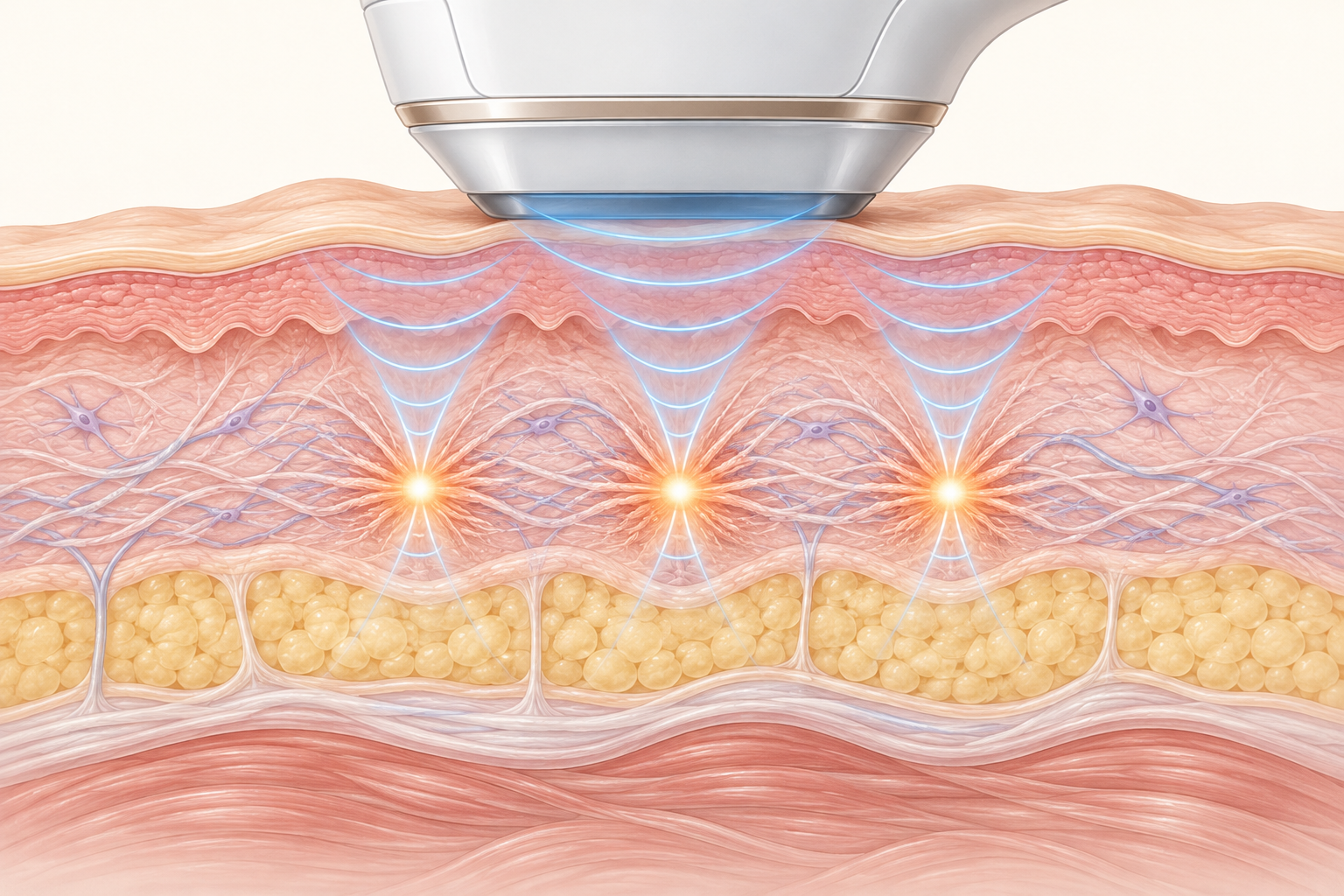
How Does HIFU Work?
HIFU uses focused ultrasound energy to create controlled heat at selected depths beneath the skin. This can trigger the body’s natural collagen-remodelling response and may gradually support firmer, tighter-looking skin.
Unlike surgical lifting procedures, HIFU does not require incisions or injections. The aim is a subtle, natural-looking improvement rather than a dramatic change to your facial features.
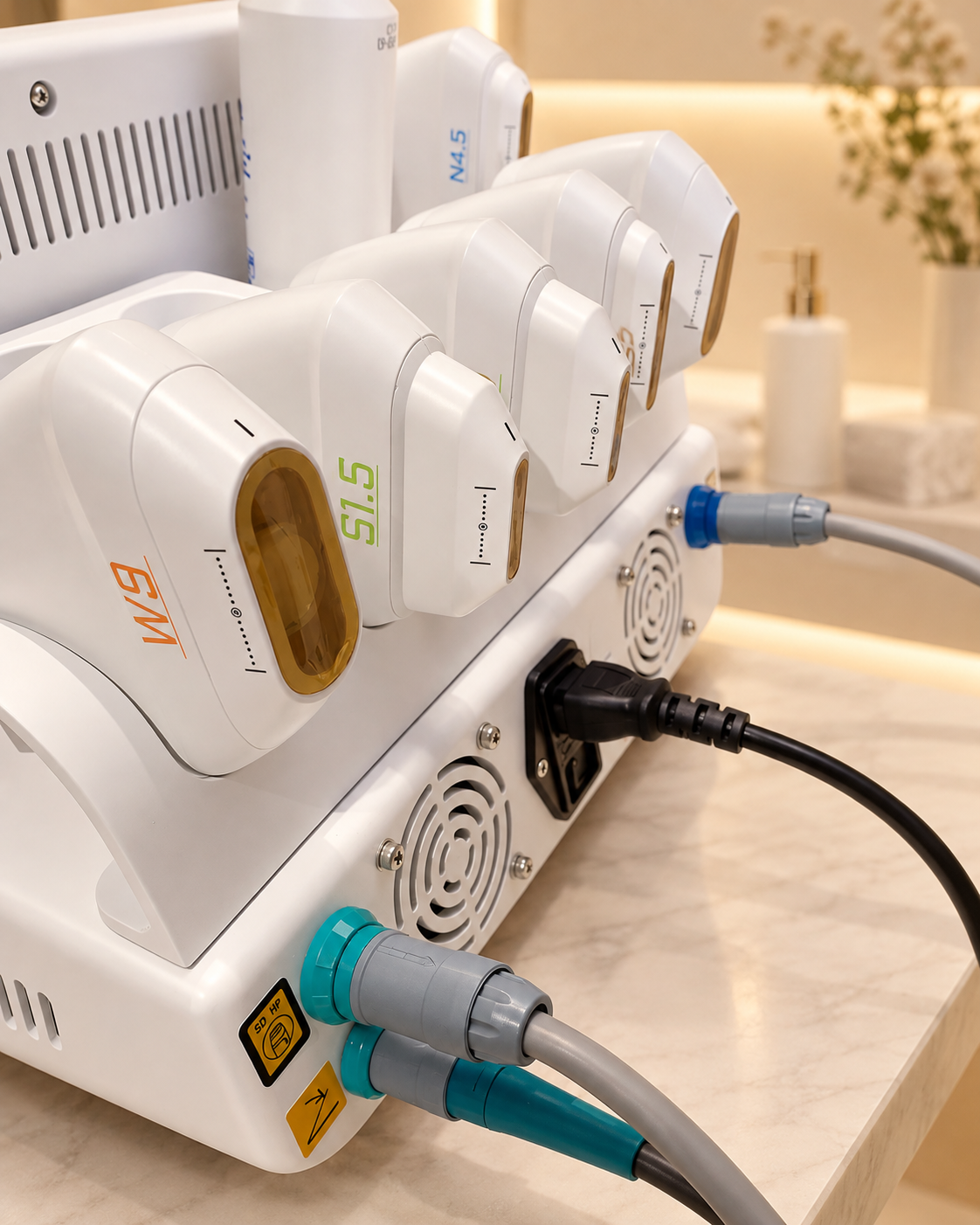
Which Areas Can HIFU Treat?
Appropriate treatment areas depend on the device used, its instructions, and the practitioner’s assessment. On the face, HIFU is commonly considered for mild to moderate skin laxity affecting the cheeks, jawline, and under-chin area.
- Face and cheeks: may support firmer and smoother-looking skin.
- Jawline: may improve the appearance of loose skin and support greater definition.
- Under chin: may support skin firmness and a more defined-looking lower face.
HIFU primarily addresses skin laxity and may not be the right option when the main concern is excess fat.
When Will I See Results?
Changes after HIFU usually develop gradually as collagen remodelling takes place. Some people notice subtle changes earlier, while more visible improvement often develops over the following two to three months and may continue beyond that point.
Results vary with factors such as age, skin condition, treatment area, and the degree of skin laxity. HIFU does not stop the natural ageing process; any maintenance plan should be based on individual needs and clinical assessment.
Is HIFU Painful? Is There Any Downtime?
During treatment, you may feel warmth, tingling, or brief discomfort in certain areas. Temporary redness, swelling, tenderness, or bruising may occur afterwards. Most people can return to normal daily activities shortly after treatment.
More significant complications are less common but can include burns or temporary nerve-related symptoms. Professional assessment, appropriate device selection, and correct treatment technique are important for reducing risk.
Who May Be Suitable for HIFU?
HIFU may be considered for adults with mild to moderate skin laxity who want to improve the appearance of firmness and facial definition without surgery and who understand that changes are gradual and individual.
HIFU is not suitable for everyone. Open wounds, active skin infection or significant inflammation in the treatment area, active implanted devices, or metallic implants in the area may be contraindications. Pregnancy, breastfeeding, certain health conditions, medicines, or previous treatments may also require additional assessment. Exact contraindications and precautions depend on the device being used.
HIFU is not a substitute for a surgical facelift, especially when skin sagging is significant. A professional consultation is important to determine whether treatment is appropriate for your skin and goals.
HIFU at Dr. Dawn Wellness & Aesthetics
At Dr. Dawn, we believe every face is unique and deserves an individual approach. Before treatment, we assess your skin, discuss your concerns, and explain the potential benefits, limitations, risks, and realistic expected outcomes.
Our goal is to help you make an informed decision with professional guidance and respect for your natural features.
Dr. Dawn Wellness & Aesthetics
Furugerði 3, 108 Reykjavík, Iceland
Wondering whether HIFU is right for you? Book a personalised consultation to discuss your skin and goals.
Sources
- U.S. FDA: Focused Ultrasound Stimulator System for Aesthetic Use — Class II Special Controls Guidance
- Microfocused Ultrasound With Visualization: systematic review and meta-analysis
- Ulthera System Instructions for Use — example of device-specific indications, contraindications, and precautions
This article is general education only and does not replace personalised medical advice. Suitability, potential benefits, risks, and expected outcomes must be assessed for each person and according to the instructions for the device being used.